
As Basque cinema takes the Spotlight at Industry@Tallinn, filmmakers and industry representatives explain why international recognition, generous incentives and a growing production base are just the beginning of a very profound relationship.
The Basque Country (the self-governing region in northern Spain is also known as “Euskadi”) has no shortage of success stories to show international partners. Its films are scooping awards, productions are multiplying, and generous tax incentives have made the autonomous territory increasingly attractive to both local and foreign companies. But the question facing its industry is no longer simply how to bring shoots to the region. It is how to turn that activity into durable businesses, greater creative autonomy and opportunities for producers without the right connections.
That tension accompanies the Basque Spotlight at Industry@Tallinn & Baltic Event, where projects, screenings and industry meetings will introduce the territory’s ambitions to Nordic, Baltic and other international professionals. Behind the showcase is a carefully cultivated strategy rather than an overnight discovery.
Behind the Spotlight
Mar Izquierdo, who recently stepped down as general coordinator of Zineuskadi but will still accompany the Basque delegation to Tallinn, describes the initiative as a way of making international markets less intimidating for smaller companies. “Every year, we tried to work out which market or festival would be the right place for our producers, and organise a Spotlight there,” she explains. Tallinn was pursued over several editions because companies wanted stronger links with the Nordic and Baltic territories and with the Script Pool and co-production activities there. The approach has also reached Thessaloniki and Copenhagen.
“If you go to a festival or market on your own, it is much more difficult,” says Izquierdo. “When we go together, it helps enormously. The following year, the companies go back on their own“. A territorial focus introduces prospective partners to several producers, their projects and available funding.
The strategy begins well before a delegation boards a plane. Izquierdo estimates that the team maintains contact with around 180 production companies. “We meet each company twice a year,” she says. “We don’t just ask what’s in pre-production, but what’s still a Post-it note on someone’s desk.” The discussions identify future projects, prospective co-production countries and the most difficult partnerships to establish.
Those conversations inform a confidential multi-year overview. “A couple of years ago, our producers wanted to work more with Italy but didn’t know how”, she recalls. “So our job was to organise meetings with Italian producers in Berlin“. France and Mexico are established partners, but priorities change with each slate. For Izquierdo, that continuous listening distinguishes a year-round internationalisation service from an occasional publicity campaign.
Real money, real complications
The scale of the industry’s growth is striking. According to figures released by the Bizkaia authorities, the Bilbao Bizkaia Film Commission supported 219 shoots in 2025, up from 168 in 2024 and 44 a decade earlier. The productions accounted for 1,298 shooting days and 9,878 engagements, with an estimated €138.11 million in economic impact, including indirect and induced effects. These are Bizkaia figures, not a total for all three Basque provinces, and engagements should not be mistaken for permanent jobs.
The authorities have announced plans for an audiovisual hub in Bilbao and Orduña, signalling that infrastructure has become a priority alongside incentives. The facilities are planned, not yet production capacity in operation. The 219 productions do not represent 219 feature films: the count includes commercials, music videos, television programmes and shorts. Figures alone cannot show whether independent companies can finance features, retain rights or survive lengthy development.
Public investment accompanies the incentives. The Basque Government’s 2026 audiovisual production call allocated €8.828 million to films, shorts and series, while a separate €650,000 programme supports project development. The latter offers up to €20,000 to individual fiction or documentary features, or €25,000 when originally made in Basque. In Bizkaia, the official incentive scheme offers a 60% deduction under qualifying territorial-spending conditions, potentially rising by 10 percentage points for productions made in the Basque language. Precise rules vary by territory and circumstance.
That complexity is more than administrative. “We have Bizkaia, Gipuzkoa and Álava, and each has its own tax authority and different incentives,” explains Izquierdo. Some prospective American partners struggle with the lack of an advance guarantee. “They want certainty,” she says. “You don’t get a certificate beforehand saying exactly what your incentive will be. The tax authorities determine the amount afterwards“. Returning companies know the system better.
The production surge has also strained crews at peak times. Izquierdo recalls the international series Kill Jackie overlapping with several local features. “We’re not such a big place that we have enough professionals for everything,” she acknowledges. Workers can come from elsewhere in Spain, but importing crews to cover a busy period is not the same as building stable local careers.
Prizes don’t pay the bills
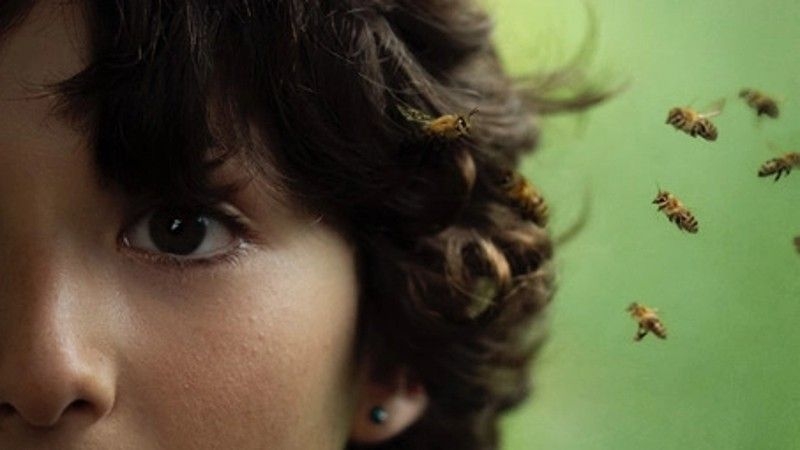
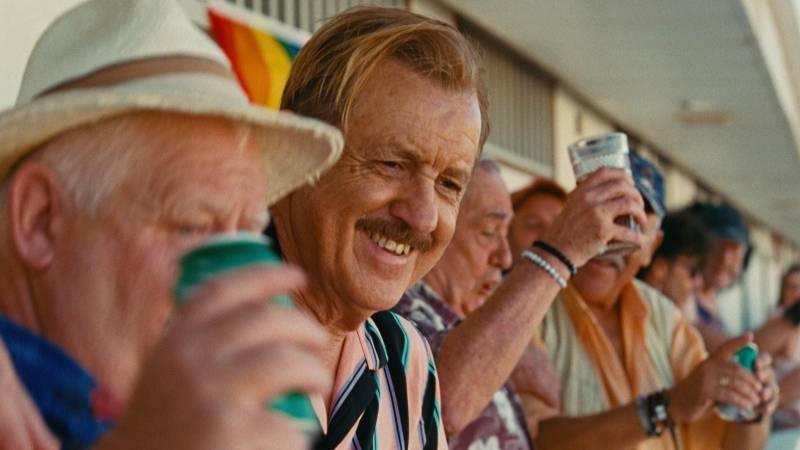
The creative achievements are undeniable. Estibaliz Urresola Solaguren’s 20,000 Species of Bees won Sofía Otero the Silver Bear for Best Leading Performance at the Berlinale in 2023. Isabel Herguera’s German-Spanish animated co-production Sultana’s Dream competed in San Sebastián that year. Last year, The Sundays (Alauda Ruiz de Azúa) took the Golden Shell (the event’s top prize), and José Ramón Soroiz won Best Actor for Maspalomas (Jose Mari Goenaga and Aitor Arregi). Alberto Vázquez’s Decorado won the 2026 Goya for Best Animated Film.
“Five or six years ago, if we’d called to propose a Spotlight, they might have asked, ‘Who are you?'” Izquierdo jokes. Today, titles such as Unicorn Wars (Alberto Vazquez, 2022) and Decorado have helped make Basque animation recognisable internationally. But festival prizes cannot keep a small company operational between productions.
“We have programmes to support young talent and women“, Izquierdo notes. Zineuskadi’s Noka Ekoizpena scheme mentors emerging women directors and producers through the transition from script to budget and pre-production; its 2026 edition backed two teams. Talent Day brought 11 student projects before industry professionals in May. Kimuak selected seven short films from 59 submissions for international promotion this year. The test is whether participants can finance their next films.
Hosting is not producing
For Jesús Choya Zataraín of Lazona Zinema, the central issue is whether a more attractive production territory can also build stronger independent companies. Lazona established its Basque operation in 2023 in order to cultivate local talent and longer-term relationships. “Rather than coming in for individual projects, we wanted to establish a permanent presence“, he says, with an office and local staff who know the creative ecosystem.
“Basque tax incentives open up many opportunities for independent film financing,” Choya acknowledges. “However, financing emerging filmmakers and more auteur-driven films remains challenging”. Securing private investment is particularly difficult, he adds, and broadcasters and streamers need to back riskier work as decisively as public institutions.
One example of the company’s ambitions is La Koreana, Joana Moya Blanco’s debut feature, being developed with Estibaliz Urresola’s Sirimiri Films. The story connects iron mining, migration and collective memory across three periods. According to its Baltic Event project listing, it has a €1.664 million budget, with €250,000 financed, and it is currently seeking co-producers and sales representation.
“La Koreana embodies one of Lazona Zinema’s main ambitions: supporting emerging Basque talent with stories deeply rooted in the territory“, Choya says. Yet he wants more direct funding for minority co-productions, allowing Basque companies to join projects developed and shot elsewhere. “We need to move beyond simply attracting productions and enable Basque companies to become active players in the international co-production landscape“.
That distinction matters: incoming shoots can generate impressive expenditure without giving home-grown producers comparable ownership, creative influence or long-term revenue.
One language like no other
For Imanol Otaegi Mitxelena, Director for the Promotion and Dissemination of Basque Culture at the Etxepare Basque Institute, creative identity should never be diluted merely to reach international audiences.
“Our uniqueness begins with Euskara, a language isolate with no proven relationship to any other living language”, he explains. “We see it as a cultural and creative asset, never as a limitation.” His argument is that international success should amplify, rather than replace, cultural specificity. “If we do not tell our own stories, others will tell them from their own perspectives“, he says. “Internationalisation means sharing our identity, not diluting it”.
Alongside Zineuskadi and other institutions, Etxepare is promoting locally rooted projects to partners in Northern Europe, the Baltics and Latin America. But Otaegi insists that visibility is insufficient: “we want Basque companies to initiate and lead projects, develop their own intellectual property and become established creative and financial partners in international productions”. Public broadcaster EITB forms part of the regional support network, although distinctive films still need suitable distribution routes.
Freelance producer Laura Lizuma offers a more personal perspective. “I tend to concentrate on development, bringing together the first elements of a national or international co-production before involving an established production company,” she explains. Her animated short Fatxada joins Basque specialist Sultana Films with Navarre’s El Rayo Verde, whose sound expertise transfers from live-action production”. I think that’s an important lesson in co-production: an animated film doesn’t have to be produced exclusively by animation companies,” she says. Different partners can bring complementary skills.
Your unique industry code
Lizuma also works regularly with Tamara García Iglesias and Atekaleun on projects including series Harri Biguna and Hauek ez dira orbainak. Trust has sustained the collaboration, but relying only on familiar networks can exclude other professionals. “We tend to look for collaborators within our familiar circles, often without exploring beyond them,” she observes. “Sometimes it feels like you need a password in order to get in!”.
She credits Basque Audiovisual and Noka Ekoizpena with opening doors, while calling for stronger peer-led networks among smaller companies. At the same time, internationalisation should not become an obligation: “Not every story needs to travel internationally,” she stresses, and trying to sell a deeply local work to an unsuitable market can produce frustration. Conversely, “a film can be deeply rooted in the Basque Country, even entirely in Basque, and still resonate beyond its borders“.
Undoubtedly, Tallinn offers the Basque industry a valuable platform. The test afterwards is whether those connections create resilient companies, lasting collaborations and films that survive beyond their festival premieres.
The image at the top of this article is a still from 20,000 Species of Bees. The image in the article is from Maspalomas.
This article was written by Davide Abbatescianni and published on DMovies.org.