

Dhanushka Gunathilake has always been driven by a passion for discovery. Now at the helm of Discovery Campus at Industry@Tallinn & Baltic Event, he hopes to spark the same curiosity in a new generation of filmmakers.
In the following interview, he reflects on his journey from the Sri Lankan film industry to Estonia, the opportunities and challenges of AI in filmmaking, and his ambitions to bring emerging talent closer to the international film industry.
In addition to leading Discovery Campus, you are also a cinematographer. How did you first discover cinematography for yourself?
I come from an artistic family – my father is a painter and my mother was an art teacher. But growing up, I was more interested in snakes and reptiles than in filmmaking, and wanted to become a herpetologist. I was always curious about cameras though, and I once completely dismantled my father's camera to see what was inside. That curiosity eventually led me into cinematography. Since Sri Lanka had no film schools, I moved to India, where I spent seven years studying and working on mostly wildlife documentaries. I later returned to Sri Lanka at the government's invitation to help establish a film school, while continuing my work as a cinematographer.
There must be a significant difference between the Indian and European film industries. What would you say are the biggest differences?
The biggest difference between South Asian and European filmmaking is the working culture. In India and Sri Lanka, productions can involve crews of 250 people, and rented equipment comes with assistants and technicians. On my first shoot in Estonia, I was surprised to realise I had to assemble my own crew. But I prefer this smaller, more personal approach, which gives greater creative freedom. Estonia is also wonderful and peaceful for filming. In India, a camera and a film crew can attract hundreds of spectators, whereas in Tallinn, people actively avoid disturbing your shoot.
When it comes to cinematography, I want to touch on a controversial subject – AI in filmmaking. What do you think – is it an opportunity or a threat?
I think AI is all about how you use it. If you see filmmaking as purely technical, AI might replace your job. But artistic vision and creativity cannot be replaced. Look at painters, for example. Commercial painters who once created huge billboards were replaced by printing and digital technology, yet the value of fine art has only grown.
At Discovery Campus this year, we're exploring how AI can streamline production processes and give filmmakers more time to focus on creativity. The key is to embrace new technologies while developing your artistic identity. Let AI handle the technical work so you can focus on the art.
Starting this year, you are the head of Discovery Campus. What motivated you to take on this challenge and lead the DC programme?
I was very happy to accept this offer because it aligns with work I've been involved in for decades. I have helped establish a film school, taught at universities, and worked with talent development programmes and international film schools. I felt my experience would be valuable to Discovery Campus. What particularly interests me is building a bridge between film education and the film industry. Film schools focus primarily on the art of filmmaking, while students should also learn about the market, sustainability and profitability. Art and industry don't always go hand in hand. I see Discovery Campus as a space where academia and industry can meet, and where filmmakers can exchange ideas and learn from each other.

Would you say there's something special about Industry@Tallinn & Baltic Event? Does Tallinn offer something different that filmmakers won't find elsewhere?
I would say the atmosphere makes it special. At major festivals such as Cannes, Berlin or Venice, everything is spread across vast venues, and unless you have meetings arranged in advance, it can be difficult to connect with other filmmakers.
Industry@Tallinn & Baltic Event is different, though. Despite being an A-list festival with hundreds of screenings and events, it still feels intimate and boutique. You can simply walk into Nordic Hotel Forum or Apollo Plaza and meet filmmakers from all over the world. There's a real sense of openness, and conversations happen naturally. Many international filmmakers recognise this too, and it's one of the reasons they keep coming back.
In Cannes, for example, you have paparazzi everywhere, constantly taking pictures. But here, you might see a famous actor or director casually walking into a kiosk to buy cigarettes or grabbing a burger. That's beauty.
Which Industry@Tallinn & Baltic Event programme are you most excited about this year?
This year, Discovery Campus will open with a discussion featuring Sir Christopher Hampton. We're also welcoming international casting directors and, through our new collaboration with the American Society of Cinematographers, bringing renowned cinematographers together with emerging talent.
What makes the programme special is the personal connections. Last year, young filmmakers were amazed to sit down for breakfast with major industry figures, discuss their work and exchange ideas.
I also greatly admire Just Film for introducing children to filmmaking at an early age. I never had that opportunity growing up, and I think it's a truly valuable and unique aspect of Just Film Industry.
What is your vision for Discovery Campus?
Our goal is to develop Discovery Campus into an international talent hub where filmmakers and producers can discover emerging talent. We already have a strong alumni network of successful film professionals. We're now expanding our partnerships with international organisations such as IMAGO and leading industry brands, including ARRI and Leitz Cine. These collaborations also enable us to offer valuable opportunities, including awards such as this year's Leitz Cine prize, which provides a cinematographer with a lens package for their next film. We want Discovery Campus to become the go-to place for discovering and supporting the next generation of filmmakers.
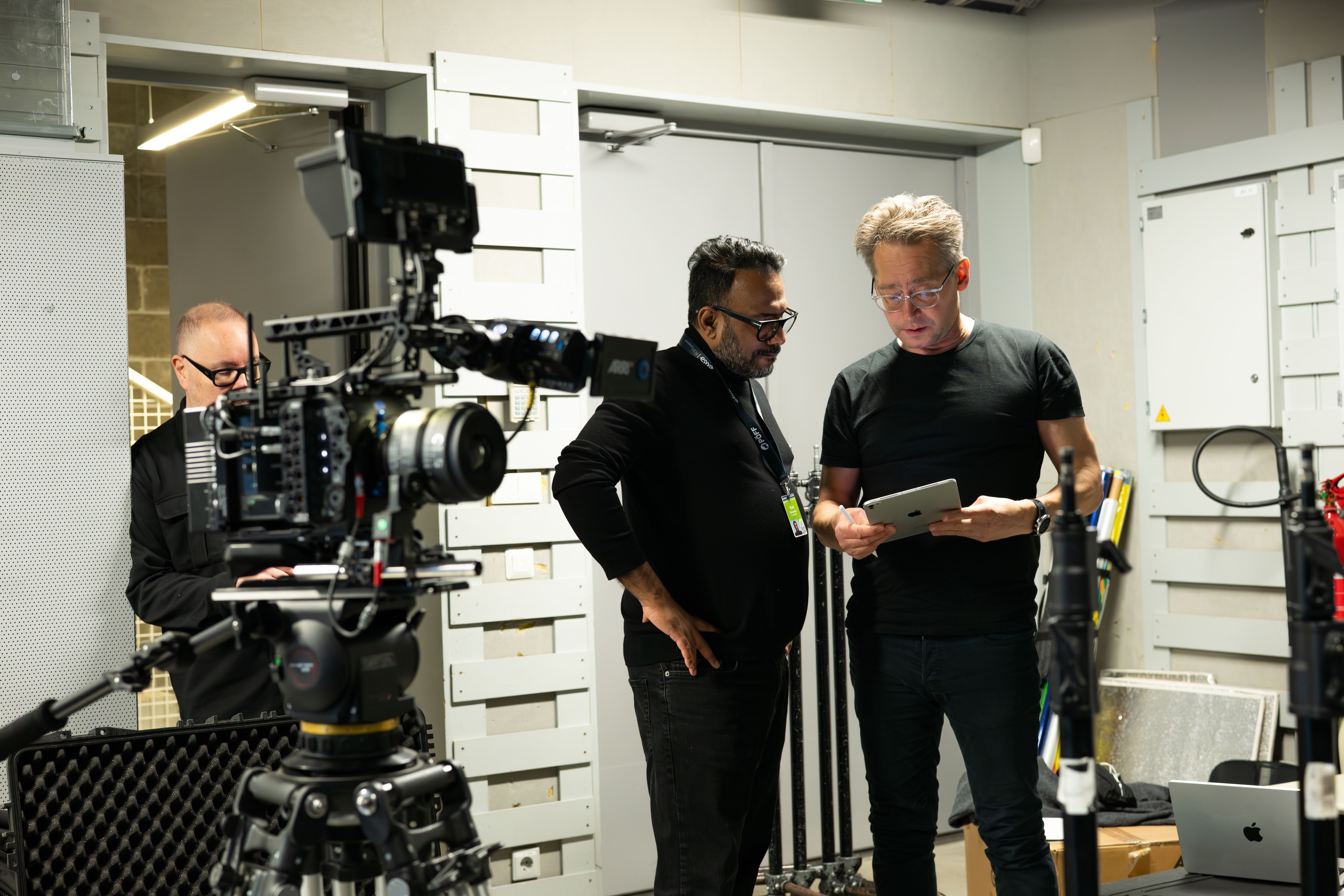
As a cinematographer, is there anything you want to tell these young filmmakers? What would you like to say to them?
My advice to young filmmakers is to never stop experimenting and challenging themselves. Ask yourself: Am I excited about what I'm creating? Is it something new, something I haven't seen before? If your work doesn't excite you, how can you expect it to excite others?
Your greatest friend and your greatest enemy is yourself. Technology can always be learned, but the real challenge is pushing your creativity beyond what you already know.
Dhanushka Gunathilake is a Sri Lankan cinematographer and film educator with over 20 years’ experience in the film industry. He is an alumnus of the Film and Television Institute of India (FTII). His cinematography credits include Dark in the White Light (2015), which premiered at the Locarno Film Festival; Suparna (2020), which premiered at the Tallinn Black Nights Film Festival; The Frozen Fire (2018); and many more. His work has received several national and international cinematography awards, including the OCIC-SIGNIS Jury Award in 2024 and the SARASVI National Award in 2023.
The Black Nights Discovery Campus is an international continuing education programme organised by the Black Nights Film Festival and Industry@Tallinn & Baltic Event (ITBE) in collaboration with leading international partners. It offers emerging film professionals the opportunity to expand their skills, complement their studies and take the next steps in their careers. During the Black Nights Film Festival, participants can take part in hands-on workshops, live events and masterclasses led by talented, award-winning film professionals.
Interviewed by Mirell Talbre, photo by Mia Tohver, the article was first published at Baltic Film Magazine 3/2026. READ THE MAGAZINE HERE