
Film-tech startups have innovative solutions to old problems such as fragmented workflows, access to work and reporting overload; find out how to turn them into lasting business, and why Estonia is ahead of the game - live from the Industry@Tallinn & Baltic Event
Estonia provides an unusually fertile setting for technology experiments. The country played a central role in the development of Skype and went on to nurture internationally successful technology businesses such as Wise and Bolt. With a population of just over 1.3 million, it is home to more than 1,600 startups, according to Startup Estonia. Its extensive digital infrastructure, business-friendly environment and relatively small domestic market have helped foster a culture of experimentation in which companies are encouraged to think internationally from the outset.
Education provides another part of the picture. In the OECD’s latest Pisa assessment, conducted in 2025, Estonian students ranked first in Europe in mathematics, science and computer problem-solving, and second in reading. Digital skills are also relatively widespread: according to European Commission data, 62.5% of Estonians aged 16-74 possess at least basic digital skills, compared with an EU average of 60.4%. ICT specialists account for 6.8% of national employment, against 5% across the bloc. Together, these factors offer promising conditions for innovation at the intersection of technology and the creative industries.
Yet Estonia’s wider digital success does not automatically translate into a technologically advanced audiovisual industry. Film productions still operate through temporary teams, fragmented workflows and tight budgets, presenting challenges that even a thriving startup ecosystem cannot resolve on its own. The challenge, therefore, is not simply to transfer Estonia’s technological expertise into filmmaking, but to determine whether that expertise can address the industry’s specific needs and produce commercially viable solutions.
One mistake’s all it takes
On a shoot that helped to set film-tech startup FilmLink in motion, a last-minute location change failed to reach part of the crew. People turned up in the wrong place, and the mistake cost the production more than €20,000, according to Estonian film producer Sander Lebreht. The company’s first response was to imagine a marketplace for locations and crew. Ten interviews with industry professionals persuaded it to change direction. “The real pain is not finding people, it is keeping them on the same information”, Lebreht says. “Schedules live in Movie Magic, call sheets in Google Sheets, changes in WhatsApp”, he exemplifies his argument.
That experience runs through the film-tech conversation at the Industry@Tallinn & Baltic Event this year. Across casting, production management, recruitment and sustainability reporting, people describe their experience with film-tech startups, and work scattered across tools and professional networks. They also face a commercial question: who’s going to pay for it? Olga Kurdovskaja of tech startup accelerator Tehnopol explains: “the biggest challenge is that solving a real problem doesn’t necessarily mean someone is willing to pay for the solution”.
The catalyst of change
Tehnopol launched its Film and Multimedia Accelerator more than two years ago in order to connect Estonia’s technology companies with film professionals. Kurdovskaja says it has supported more than 15 startups, with opportunities emerging in production management, casting, post-production and data workflows. “Film production still involves a lot of manual work, fragmented tools, tight budgets and complicated coordination,” she says. The programme brings film professionals into development as mentors, testers and prospective pilot partners. “But making introductions is only the beginning. We help teams test their assumptions, develop business models and find customers”.
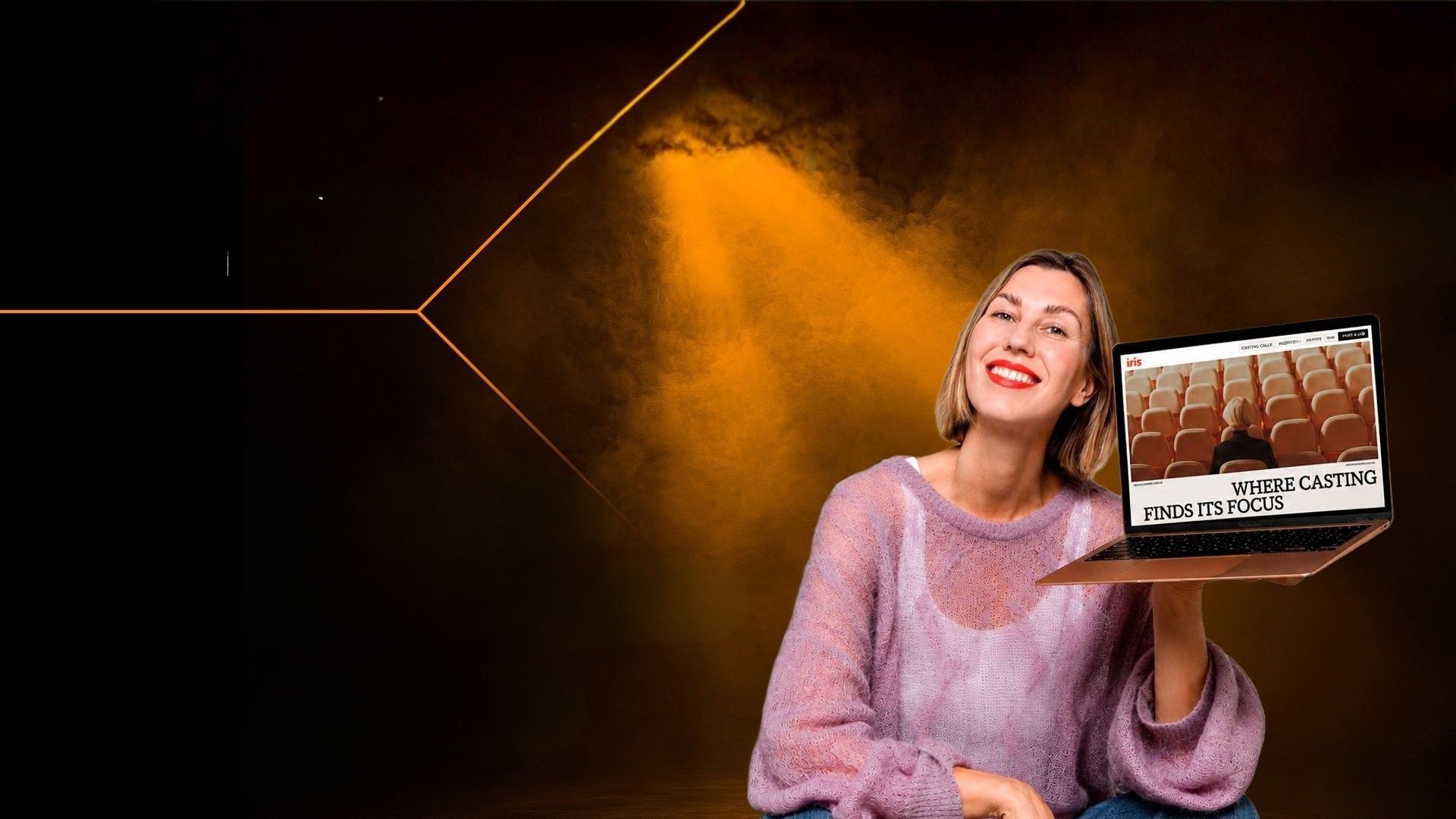
Kurdovskaja points to film-tech startup Iris Casting Ecosystem, whose exposure to international industry professionals and investors at Cannes Next encouraged its founders to consider further markets and accelerate development. She says Iris secured around €150,000 in funding from the Estonian Business and Innovation Agency. FilmLink and SetVox have obtained now their first paying customers. These are early commercial signals; her figures do not establish revenues or how many customers will stay.
The latest hackathon at Ida Hub has produced another set of possible next steps. One producer is discussing a team’s solution with a view to testing it on his next film, and three teams have been invited to join the accelerator. Those trials and invitations still have to become sustained relationships. Kurdovskaja sees the combination of production facilities and technology development at Ida Hub as a way to test products where films are made, while Industry@Tallinn can connect these companies with international buyers.
“Estonia is a good place to test products, but startups need larger markets to grow,” she says.
Just like Magic!
FilmLink’s development illustrates how much testing can change the product itself. The idea began at a hackathon in September 2025. Its web platform reached minimum viable product stage in February 2026 and was tested on six student productions at Tallinn University’s Baltic Film, Media and Arts School. “Testers liked the platform but would not leave their spreadsheets, so we went to where they already work,” Lebreht says. FilmLink now takes the form of a Google Sheets add-on: users upload a Movie Magic schedule and generate call sheets inside their existing spreadsheet, with files remaining in their own Google account. Lebreht expects the add-on to go live on Google Workspace Marketplace in November.
“On a feature, a 2nd AD spends at least 15 working days creating and managing call sheets by hand, and one typo can mean thousands of euros in overtime”, he says. That is his estimate of the workload the company is addressing; a measured saving from using FilmLink has yet to be supplied.
Tehnopol’s contribution included validation, marketing mentors, legal support on intellectual property and GDPR, and a Cannes Next panel opportunity. “Estonia’s advantage is proximity: every 2nd AD is one phone call away and feedback arrives within days,” Lebreht says. The small home market also makes international sales necessary from the outset. FilmLink envisages subscriptions per project, monthly or annually.
Never cast doubt
Terje Ronja Kissa’s Iris grew out of Agency Icon, her casting company, which handles around 120 projects a year. Research involved more than 80 casting directors, directors, producers and actors. Kissa says they wanted “one calm place for the work instead of five to seven scattered tools”. She also estimates that casting windows have become 30–50% shorter, although no comparison period was supplied for that figure.
The resulting platform brings together briefs, talent search, availability checks, guided self-tapes, reviews, communication, client presentations, confirmations and contracts. “Each casting company and production keeps its own talent roster, and Iris adds structure without taking ownership”, Kissa says.
The platform is already live, with nine paid pilots across Europe, including TBWA Helsinki, spanning features, television and commercials. AI structures briefs, supports searches in plain language and helps performers deliver technically usable tapes. “Taste and judgment stay human, and the casting director is the lead of every project by default,” Kissa notes.
How do you sustain growth?
For AI-powered startup Mureel founder and CEO Olga Hartšuk, fragmentation appeared in the requirements attached to financing. Carbon calculations and green production obligations were followed by diversity and inclusion criteria from funds and questions about financial sustainability from private investors.
“Sustainability requirements reached me from several directions, with nothing connecting them,” she says. “A single co-production can involve as many as 10 funding sources, many with their own sustainability criteria”. On her latest project, she spent about a week preparing sustainability documentation for a single funding application.
The research Hartšuk cites provides context for that burden. A November 2026 Creative PEC paper by Pietari Kääpä and colleagues uses the example of a co-production spanning Germany, Austria and Italy which would, in principle, face three frameworks and three carbon tools with overlapping requirements. Separately, strategy consultants Olsberg•SPI’s 2026 report on the audiovisual sector’s contribution to EU competitiveness, commissioned by Netflix, names six examples of labels and toolkits.
“Small producers don’t have sustainability departments,” Hartšuk says. “We do this work with small teams and tight budgets, and what we submit is usually archived and never used again”. She describes Mureel as “AI-assisted compliance data infrastructure” which maps production data and supporting evidence to standards, funder requirements and company disclosures, making that information reusable across productions. “Each figure stays linked to its evidence and to the requirement it answers, so reviewers can check it without chasing documents by email,” she says. The production company retains its data, while institutions can review and approve reports within the platform.
Widening networks
Poland’s team4set – a free online platform and community designed to connect students and young professionals – brings a further question into this conversation: how much of the obstacle is the technology, and how much is the way the industry chooses people? CEO Anna Huth has worked at a Polish film school since 2011. As her training programmes developed, productions increasingly asked her to recommend crew. “That’s when I realised I had become a bottleneck. People actually had to call me. I had to open an Excel file and check who had been trained and who I could recommend.
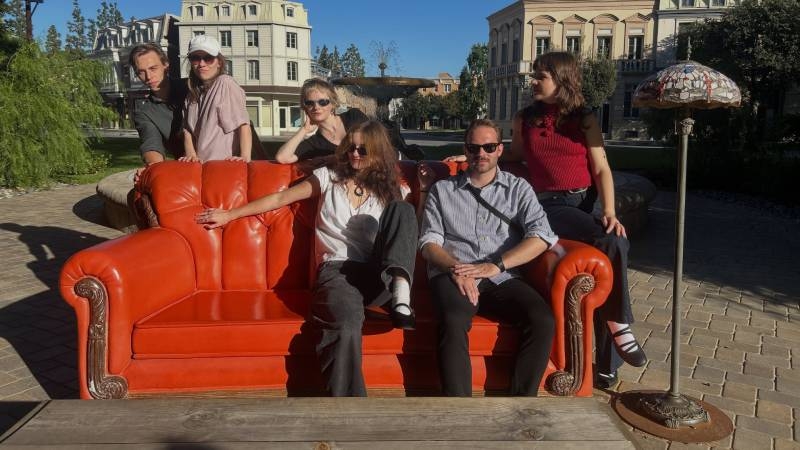
Team4set (pictured above) makes skills, experience and recommendations more visible. Huth reports more than 800 platform users, alongside more than 1,000 people trained in 35 film professions through the related training activity. The two totals measure different things: taking a course does not require registration on the platform, and both are free.
The training work has drawn support from the Polish Film Institute and Netflix, with Netflix backing film:lab from the outset and subsequently offering paid internships and recruiting graduates. Huth also cites support from the Visa Foundation. That history does not remove the question of a sustainable model for the platform today. “Right now, we’re basically being supported by ourselves”, she says.
Adoption has its own complication. In her preliminary academic research into crewing decisions, Huth finds that uncertainty encourages producers to choose familiarity over expertise. “The bigger challenge is a mental hurdle: do I go there and start using it, or do I still call Anna Huth and ask her whom she would recommend from the website?”. Her answer is to widen access to the relationships on which production relies. “A young professional shouldn’t have to personally know the right assistant director, production manager or head of department in order to have a chance of being discovered”, she says.
The image at the top is of the Tehnopol Film and Multimedia Accelerator.
This article was written by Davide Abbatescianni and published on DMovies.org